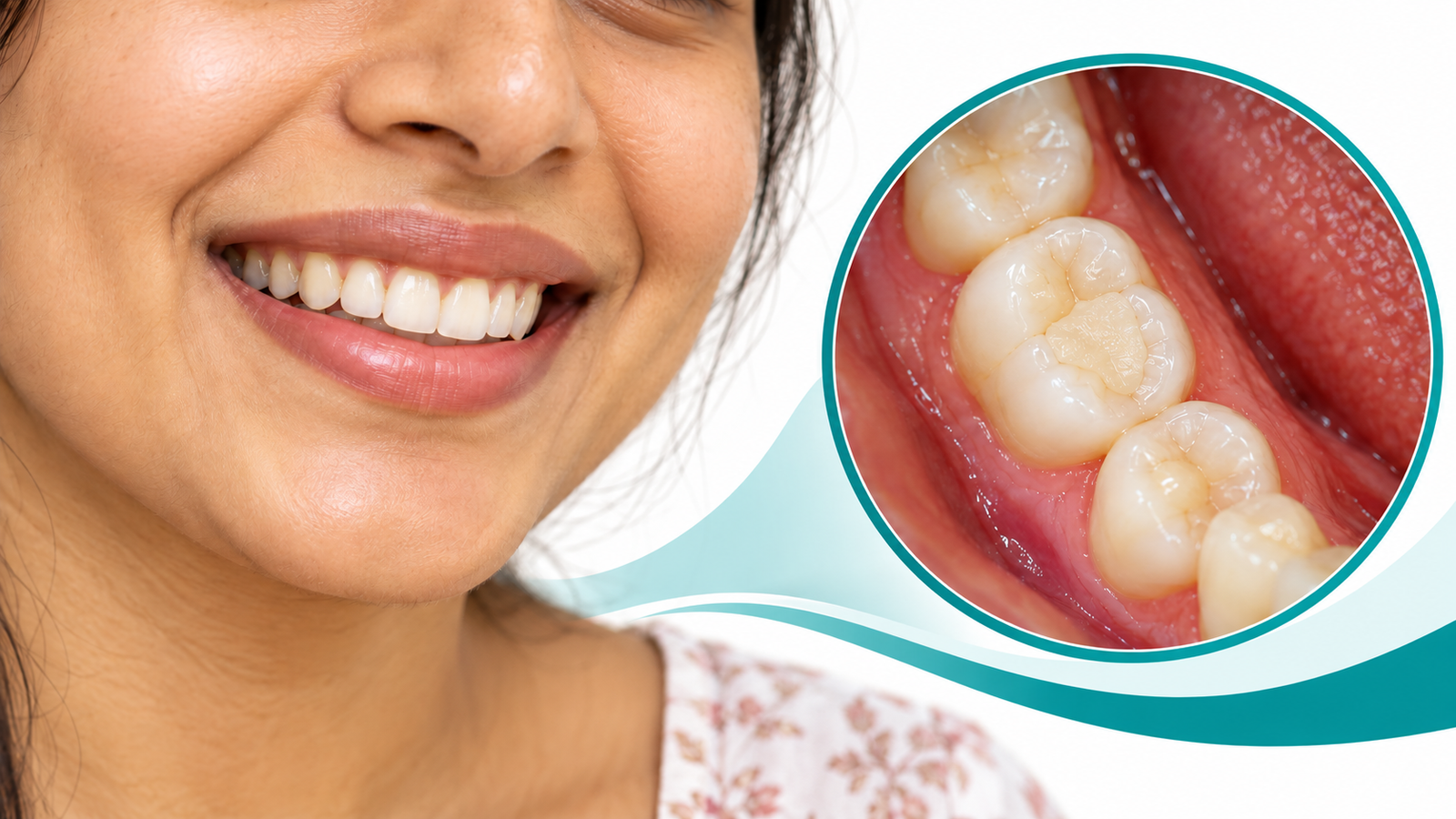
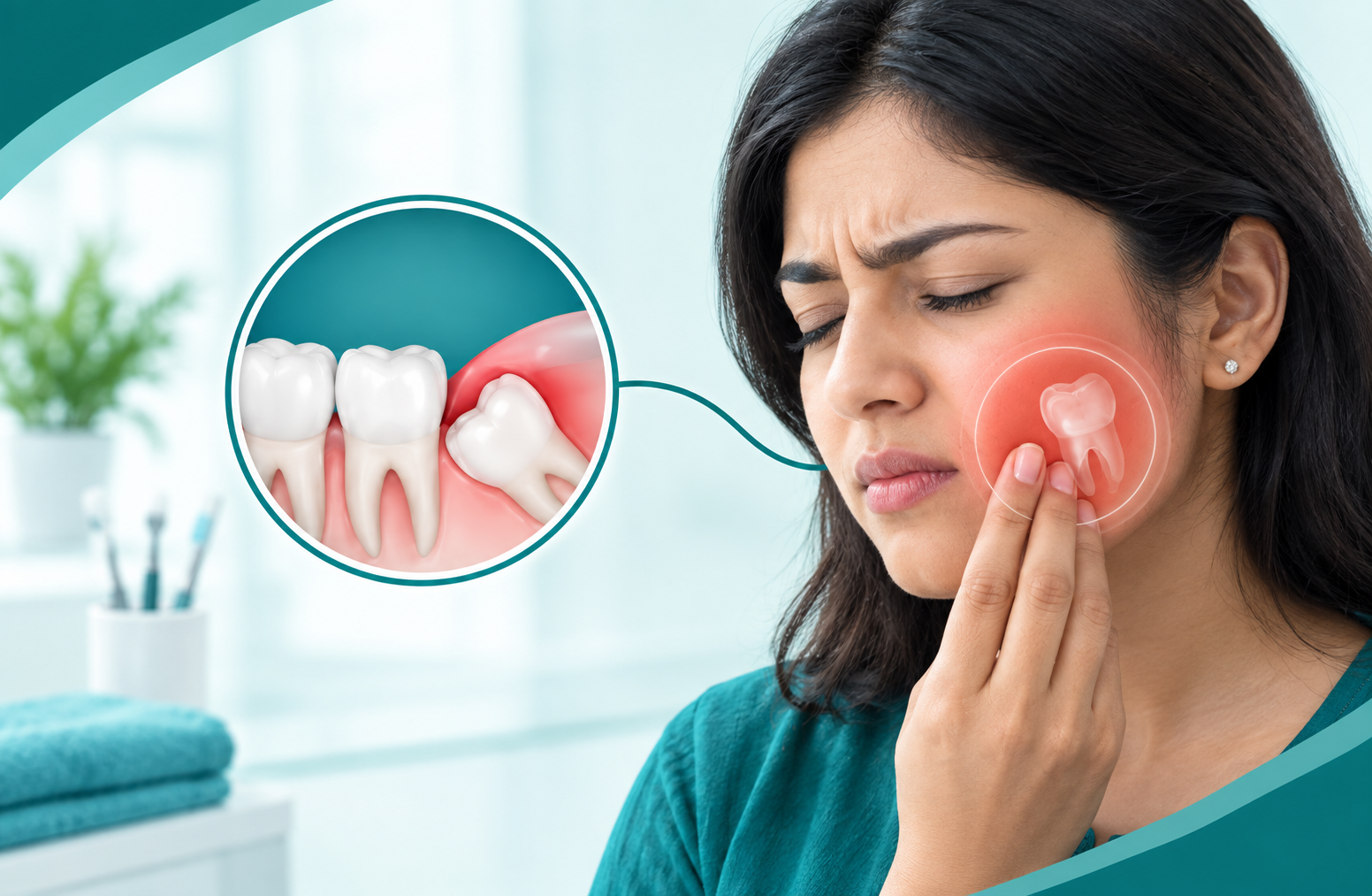

Wisdom teeth are the last permanent teeth to develop and generally begin to erupt during the late teenage years or early adulthood. Some people have sufficient space for these molars to emerge normally, while others may have limited room or an unsuitable eruption path. When a wisdom tooth cannot come through the gum properly, it is described as an impacted wisdom teeth.
Restricted jaw space, an abnormal eruption angle, or partial eruption can make the area around a wisdom tooth harder to keep clean. Food debris and bacteria can collect around the tooth and may result in gum irritation, swelling, discomfort, or infection. A person can have dental impaction without experiencing symptoms at first, but complications may appear later. A dental examination can help determine the tooth’s position and whether observation or infected wisdom tooth treatment is appropriate.
Understanding Wisdom Teeth and Their Causes of Impaction
- Completely covered by gum tissue
- Partially visible above the gum
- Tilted toward the neighboring molar
- Positioned sideways within the jaw
- Retained within the jawbone
Common Causes Behind Wisdom Tooth Impaction
- Restricted jaw space
- An abnormal eruption angle
- Smaller jaw structure
- Delayed tooth development
- Existing dental crowding
- An irregular eruption pathway
Signs and Symptoms to Watch For
- Swollen gum tissue
- Redness around the affected area
- Difficulty opening the mouth fully
- Discomfort while eating or chewing
- Unpleasant taste or bad breath
- Tenderness around the jaw
- Pain that may spread toward nearby areas
Can Wisdom Tooth Impaction Cause Dental Problems?
When a wisdom tooth does not emerge correctly, keeping the surrounding area clean can become challenging. Depending on its position, the tooth may contribute to different dental concerns.
Gum Infection
A partially erupted wisdom tooth can leave a small space between the gum and tooth. Food particles and bacteria may collect in this area, potentially causing inflammation, irritation, or infection.
Tooth Decay
The back portion of the mouth can be difficult to reach during everyday brushing and cleaning. An incorrectly positioned wisdom tooth may make plaque and food debris more likely to remain around the tooth.
Damage to Nearby Teeth
When an impacted wisdom tooth grows toward an adjacent molar, it may place pressure against that tooth. Depending on the position, this can contribute to problems involving the neighboring tooth.
Gum Disease
Bacterial accumulation around an impacted or partially erupted wisdom tooth can irritate nearby gum tissue. Ongoing swelling or inflammation should be examined by a dental professional.
Cysts and Other Rare Complications
In uncommon situations, a tooth that remains trapped inside the jaw may be associated with the development of a cyst or another related complication. Regular dental examinations can help detect unusual changes at an early stage.
The possible effects of dental impaction can vary according to the tooth’s position and how it relates to the surrounding teeth, gums, and other oral structures.
What Happens When a Wisdom Tooth Becomes Infected?
- Ongoing or increasing pain
- An unpleasant taste in the mouth
- Persistent bad breath
- Difficulty or discomfort while chewing
- Pain when opening the mouth
How Are Wisdom Teeth Diagnosed?
- Reviewing symptoms and dental history
- Examining the gums and neighboring teeth
- Checking whether the wisdom tooth has partially erupted
- Taking a dental X-ray when required
- Examining the roots and surrounding structures
- Determining whether observation or treatment is needed
Treatment Options for Wisdom Tooth Problems
Treatment depends on the individual condition of the wisdom tooth. The dentist may consider its position, symptoms, infection, and possible effects on surrounding structures before recommending a suitable approach.
Monitoring
If the wisdom tooth is not creating symptoms or other dental concerns, the dentist may recommend regular observation and dental checkups.
Cleaning and Medication
Professional cleaning can help eliminate accumulated food debris and bacteria around the affected area. When infection or inflammation is present, medication may be recommended based on the dentist’s assessment.
Medication may help control certain symptoms or infections, but it does not change an incorrectly positioned wisdom tooth.
Wisdom Tooth Removal
Extraction may be considered when a wisdom tooth repeatedly causes infection, pain, or other complications. Removal may also be recommended when the tooth contributes to decay, affects a neighboring tooth, or creates another dental concern.
The extraction method depends on factors such as how much of the tooth has erupted and where the tooth is positioned. The dentist can explain the procedure and provide instructions for care before and after extraction. When infected wisdom tooth treatment involves removal, the dentist will also address the infection and underlying dental concern.
What Is the Difference Between a Normal and an Impacted Wisdom Tooth?
- Has adequate room to erupt
- Develops in a suitable direction
- Generally easier to clean
- Can emerge normally
- May have insufficient space
- May develop at an unusual angle
- May be difficult to clean
- May remain partly or completely covered
A normally positioned third molar generally has enough space and a suitable direction to emerge. An impacted wisdom tooth may stay beneath the gum or develop at an unusual angle.
The visible appearance of the tooth alone does not determine whether treatment is required. A dentist can assess its position and surrounding structures before recommending the appropriate course of action.
When Should You See a Dentist?
- Persistent pain toward the back of the mouth
- Repeated swelling around a wisdom tooth
- Difficulty opening the mouth
- Inflamed or infected gums
- Ongoing bad breath or an unpleasant taste
- Difficulty chewing
- Pain near the neighboring molar
- Repeated discomfort in the same area
How Can You Reduce Problems Around Wisdom Teeth?
- Brushing carefully around the rear molars
- Cleaning between the teeth regularly
- Giving extra attention to difficult-to-reach areas
- Attending routine dental examinations
- Reporting recurring swelling or pain
- Following professional cleaning advice
- Seeking dental guidance when symptoms return repeatedly
Why Choose Dantam for Wisdom Teeth Care?
At Dantam, wisdom tooth care starts with a detailed evaluation of the patient’s dental condition. The dentist considers the position of the wisdom tooth, surrounding structures, symptoms, and overall oral health before discussing suitable treatment options.
A thorough examination and appropriate diagnostic imaging can help the dentist understand the tooth and root position. The adjacent teeth and gum tissues are also evaluated before creating an individualized treatment plan. Patients can receive guidance about the procedure and what to expect during the recovery period.
For patients with impacted wisdom teeth, Dantam focuses on understanding the specific dental condition and developing a treatment approach according to the clinical findings rather than using the same solution for every patient.
Frequently Asked Questions
At what age do wisdom teeth usually appear?
Wisdom teeth commonly begin to erupt during the late teenage years or early twenties. However, eruption timing varies between individuals, and some wisdom teeth may remain beneath the gum for many years.
Can an impacted wisdom teeth cause pain?
Yes. An impacted wisdom teeth can cause discomfort when it presses against nearby structures or when the surrounding gum becomes inflamed or infected. However, some impacted teeth may remain without noticeable symptoms.
Do all wisdom teeth need to be removed?
No. Removal is not automatically required for every wisdom tooth. The dentist will consider its position, symptoms, infection, effect on nearby teeth, and findings from the dental examination before recommending treatment.
Can an impacted wisdom teeth cause infection?
Yes. A partially erupted wisdom teeth can create an area where food debris and bacteria become trapped. This can increase the risk of inflammation and infection around the tooth.
How is wisdom teeth impaction diagnosed?
The dentist generally starts with a clinical examination and reviews the patient’s symptoms and dental history. When needed, a dental X-ray can provide a clearer view of the wisdom tooth’s position and the structures surrounding it.
How long does wisdom teeth recovery take?
Recovery time differs from person to person and depends on the complexity of the extraction and the individual’s healing process. A straightforward extraction may heal within several days, while removing a deeply positioned wisdom teeth can require a longer recovery period. The dentist can explain the expected healing timeline based on the specific procedure.