
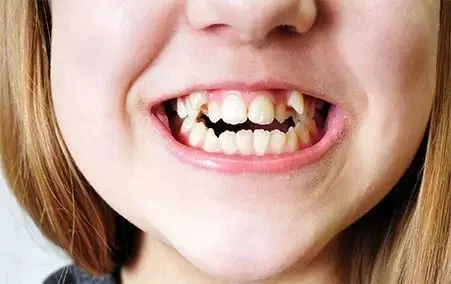
Modern dental treatments can effectively correct crooked teeth, enhancing both your smile and overall dental function.
There are many reasons why people can be insecure about their teeth. It might be because it gives an aging appearance that can make an individual look less professional or credible. The technical term for crooked teeth is “malocclusion”. Malocclusion can occurs when a child has both his baby and permanent teeth. This can result in crowding of teeth and therefore the growing teeth tend to push against each other. Crooked teeth are also hereditary, when it so happens that the mouth is small for the future permanent teeth. Unfortunately in kids, tongue thrusting and thumb sucking just worsen the problem. In adults, a missing tooth can cause the other teeth to shift its position due to the chewing forces and because of which they don’t align properly. In rare cases, crooked teeth can be the result of other medical conditions, such as cleft palate or temporomandibular joint (TMJ) disorder.
Aside from the aesthetic problem, crooked teeth also cause oral problems. Crooked teeth and misaligned bites can:
- Cause difficulty in chewing
- Cause difficulty in flossing and brushing of the teeth because of the misalignment of the teeth
- Cause plaque formation resulting in cavity and gum disease
- Cause muscle and jaw strain due to inadequate support to the jaw
- Cause tooth pain or sensitivity
- Make people self-conscious of their smile
Orthodontics is the field of dentistry that is associated with tooth and jaw joint positioning and alignment. The treatment for malocclusion can be put in mainly two categories i.e. with or without braces. A variety of treatment options are available for crooked teeth correction for adults and children alike.
Retainers: In the case when crowding of teeth is less, one can you retainers for correction of teeth. There are two types of retainers: fixed retainers also called bonded lingual retainers and removable retainers. Fixed retainers are fixed to the inner surface of the teeth with dental cement. It makes the teeth remain in a fixed position, preventing them from shifting. The removable retainers are much like the fixed retainers in functionality but are removable in nature. These are very expensive to replace if it is lost.
Braces: These are the traditional treatment option for crooked teeth correction. Braces are made of materials such as stainless steel, ceramic, plastic or a combination of materials. Braces apply pressure to the teeth and jaw to bring them to their correct positions.
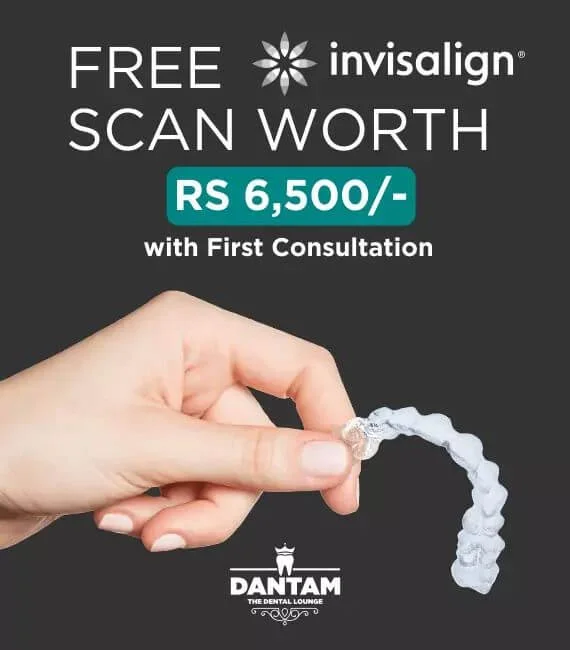
Invisalign system: They are clear aligners that help in pushing the teeth to their desired positions. These aligners need to be worn for at least 22 hours to have an effect. They are an alternative to the traditional braces that can give an unpleasing appearance. Since these can be removed it makes eating and oral hygiene easier. After using Invisalign, patients might still need to use retainers to keep the teeth in place.
Headgears: They are attached to braces that give the extra force to push the teeth into their positions. These appliances are not discreet and is usually worn in the night.
Palatal Expanders: If the child’s mouth is too small for the permanent teeth to grow, sometimes the dentist might suggest to use palatal expanders that will help to create space for the future teeth to grow.
Herbst Appliance: It straightens teeth by correcting the jaw imperfections. It consists of tube and rod mechanism to put pressure on the jaws. They are commonly used among kids and can cause a little bit of discomfort. Like headgears, this appliance is not very discreet.
Porcelain Veneers: These are used in minor problems, like gaps and uneven teeth. They can change the shape of the teeth and can improve its color as well. These are cosmetic solutions that can improve the appearance of the teeth in a small amount of time.




Comments
annabrown
Wow, cool post, thanks for sharing.
cmsmasters
Happy to be of service.